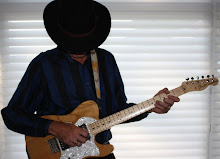
Before I die, I want to be able to duplicate the tone David Gilmour has
on Comfortably
Numb.
Showing posts with label Pink Floyd. Show all posts
Showing posts with label Pink Floyd. Show all posts
Friday, 31 January 2020

Friday, 11 January 2019
Take A Breath
I’ve been trying to think of something nice to say about the saxophone
for most of my life, and I finally got it: on some of David Gilmour’s best guitar
solos, you can tell that he also plays the sax.
Saturday, 4 August 2018
Set The Controls For The Heart Of The Sun
Every year when I see who is getting inducted into the Rock and Roll
Hall of Fame, my reaction is either “it’s about time” or “why them?” Maybe sometimes both.
This year, I got to thinking: what makes a band deserving anyway? So I listed my 10 favourite bands and looked
for the similarities. Here’s the list: The Beatles, Led Zeppelin, Cream, Deep
Purple, AC/DC, Pink Floyd, Queen, The Who, The Rolling Stones, CSNY, The Kinks,
Dire Straits, Jethro Tull, U2.
OK, that’s more than 10, but nevermind.
And I know your list is different and that’s cool.
But what sets them apart?
Genre/subcategory? Nope. Great musicianship? Mostly, but not – with the greatest respect
to those listed – universally. Killer
song writing? It helps, I suppose. Clothes?
Just kidding.
Maybe it’s a combination of curiosity and fearlessness. I tend to think of my favourite artists as
explorers, trying new ideas, poking around in unfamiliar places. Even after they’ve forged their own sound and
persona, there’s a restless drive to seek out the new and see what it has to
offer.
That drive, that curiosity, that willingness to try something new is why
the music of these bands still sounds fresh and exciting. That spirit of exploration keeps the music
young.
Thursday, 9 November 2017
Come On You Painter, You Piper, You Prisoner
So …
actually … underneath it all .. Shine On You Crazy Diamond is a
blues song.
Only took me 4
decades or so to see that. Guess I’m a
slow learner.
Friday, 22 May 2015
Pick Up My Guitar And Play
You could disagree with the albums, but it’s hard to debate the artists
who made Guitar World’s 10 Essential Classic Rock Guitar
Albums: Van Halen, Aerosmith, Deep Purple, Led Zeppelin,
Pink Floyd, Hendrix, The Who, The Stones, The Beatles.
Personally, I would swap Are You
Experienced? for Electric Ladyland
and Wish You Were Here for Dark Side of the Moon, and I do not
count myself among those who believe Exile
On Main Street is The Stones’ masterpiece, but let’s not quibble.
Except: The Doors? Really?
The Doors debut album is absolutely an essential part of the Classic
Rock catalogue, but who considers them a guitar band? And - with all due respect - who puts a ton
of effort into learning how to play like Robby Krieger? I didn’t even remember his name.
Not to take anything away from The Doors well-deserved legendary status,
but on a list of essential guitar albums, I think we’d be better served
by the likes of AC/DC, Dire Straits, Clapton or Petty. Little bit more distinguished guitar playing came
from those cats.
Friday, 9 January 2015
Music in the Cafes at Night; Revolution in the Air
Beale Street, Bleeker Street, Haight-Ashbury, Sunset Strip, Music Row
and Motown.
These are the streets that changed music history,
according to Rolling Stone - or is it Chrysler?
And of course, by Motown they mean West Grand Boulevard, but we’ll let
that slide, shall we?
Elvis, Dylan, The Dead, The Doors, all those Motown hits, all that
Country … no one’s gonna argue that some pretty important music came off these
streets – and still does.
Here’s another one, though, that’s kind of a glaring omission: Abbey Road.
A little band called The Beatles made a few hit records there, and I’m
told they enjoyed a bit of influence in their day. Oh, and The Hollies, The Shadows, Pink Floyd,
Radiohead and Oasis.
Oh wait a minute! Guess they
don’t get many Dodge Challengers driving around London.
Friday, 24 October 2014
No One Here Gets Out Alive
In each of the six decades since the birth of rock and roll, you can
find some magic, and you can shake your head and wonder how anybody could
listen to such rubbish.
But for me, the 70’s is the big enigma.
Some of the best rock, much of it indelibly stamped into the concrete of
our collective consciousness, was made in that decade. And I couldn’t do without it. But it was a confusing decade, one with
little or no direction, a time of extremes and excesses.
Hard rock, prog rock, power pop, funk, metal, disco, jazz fusion, punk, folk-rock,
singer-songwriter … and the leisure suits.
Brother.
The 70’s were not kind to a lot of 60’s icons. The Stones, Clapton, and The Who, for
example, all had their moments, but really they drifted through with mixed results. Led Zeppelin and Pink Floyd triumphantly
pushed through, and then collapsed at the finish line. Deep Purple didn’t make it. The Beatles and Hendrix didn’t even get out of
the starting block.
The energy that began as punk and coalesced into New Wave was certainly
welcome. It brought some much-needed
focus to all that aimless thrashing about.
To borrow from Rossini’s invective against Wagner, the 70’s had
wonderful moments, and dreadful quarters of an hour.
Friday, 17 October 2014
Whole Lotta Riffs
The beat: definitely. The energy:
probably. The simplicity: most of the
time. The lyrics: often. The audacity: goes without saying. But what really sets a great rock song apart
is the riff. The hook that buries itself
into your DNA, where it forevermore acts as a switch, a trigger, a hypnotist’s
command.
BBC Radio’s Greatest Guitar Riffs
have most of the ones you’d expect: Whole
Lotta Love, Sweet Child O’ Mine, Back In Black, Smoke On The Water and Layla landing in the top 5. Can’t really argue with those.
And as you scan down the list, you realize – joyfully, I’ll bet – just
how much great music we’ve been blessed with.
Dire Straits, Pink Floyd, Hendrix, Chuck Berry, Rush, Free, Fleetwood
Mac, Cream … on and on it goes. I can’t
think of one riff on this list that doesn’t deserve to be here.
However, it is nothing short of shocking that the Stones and Beatles
have only one entry each. Nice of the
BBC to spread the joy, but I can think of another dozen or so riffs from those
two groups that are more than worthy. Nevermind. I’ll get over it.
Sad, though, that there’s nothing current. Rock riffs seem to have gone the way of the
dodo, and that is not a good thing.
Friday, 12 September 2014
Undercover Agent For The Blues …
… and Rock! Take a look at the
influence John Mayall has had. The
connections. The influences. The great
music that came out of his influence.

It’s almost unbelievable. The
diagram just depicts the most obvious connections. The ones that could fit on a page. It’s missing the Yardbirds-Page-Zeppelin
link. It obscenely abridges Clapton’s
reach. It skips the whole Dylan universe
outside the Willburys. It doesn’t even
try to show who Phil Collins has touched, which is, like, everybody.
Was John Mayall as influential as Lennon, Dylan, Jagger, Hendrix or
Page? Maybe not, but when you think
about who he’s played with – and who they
played with, he’s touched just about everything. Mayall is one important cat.
Thursday, 24 April 2014
A Hunger Still Unsatisfied
Are you older than, say,
30? Got regrets? Feel like a part of you is lost? Still trying to find yourself – in the
future, the present, the past? Or … want
your spirit crushed?
Go listen to High Hopes by Pink Floyd. They’ve done a lot of songs about loss, but
this one is the champ.
A life consumed by slow
decay. Steps taken forward but
sleepwalking back again. Encumbered
forever by desire and ambition. Our
weary eyes … the grass was greener … the water flowing … the endless river …
sheesh!
Poignant poetry, a moody
tune with a haunting, tolling bell, impeccable Floyd production, and perhaps
David Gilmour’s most heartbreaking guitar solo.
I cannot listen to this song without weeping.
Sad, cathartic, and absolutely
beautiful. By the way, the accompanying music video is
one of the most amazing videos of all time.
The light was brighter.
Monday, 31 March 2014
Hey Mr. Fantasy
As the intro points out, the
number of reunions that have taken place since Traffic first did it in 1970 are
too numerous to list, but the Readers’ Poll on Bands That Should Reunite
is still kinda sad.
We’ve got the usual
suspects: Pink Floyd, Oasis, GNR, The Smiths, Genesis, The Kinks … but
most of the write-ups say something like “it ain’t going to happen ‘cause xx
hates yy” or “zz isn’t interested, so dream on.”
So it’s sad. Or worse.
I mean, Led Zeppelin can’t
reunite because their drummer is dead. Ya, the 2007 show was amazing and Jason
Bonham did a great job, but shouldn’t we move on?
Can’t we treasure what’s
come before and still give a shot to the host of current acts out there that
deserve a listen? Isn’t “the new” what
attracted us to those old acts in the first place?
Friday, 10 January 2014
Mind-Blowing Music
Gibson has a list of 10 Classic Albums to Expand Your
Musical Horizons, and a message: get outside your comfort zone.
The list includes work by
the likes of Hendrix, Pink Floyd, The Black Keys and Tom Waits, with whom I
easily relate.
But it also includes artists
I have shied away from, such as Coltrane, Hank Williams and Brian Eno.
And, sadly, it contains a
few artists I had never heard of but probably should have, like Sonny Sharrock,
Junior Kimbrough and Richard Hell and the Voidoids.
Reading the write-ups, I can
see that each of these artists would have something to offer that relates to
genres and styles I like, but pushes me past where I normally go if left to my
own devices. In terms of lighting that
creative spark, it’s a great idea to immerse yourself in something new.
And if I think about it,
most of my heroes did/do just that.
Thanks, Gibson. You’ve given me some homework to do.
Monday, 30 December 2013
Just Nod If You Can Hear Me
Back on the sad songs. Pink Floyd’s Comfortably Numb does a spectacularly morose job of summarizing the
human condition.
When
I was a child
I caught a fleeting glimpse
Out of the corner of my eye
I turned to look but it was gone
I cannot put my finger on it now
The child is grown
The dream is gone
I have become comfortably numb
I caught a fleeting glimpse
Out of the corner of my eye
I turned to look but it was gone
I cannot put my finger on it now
The child is grown
The dream is gone
I have become comfortably numb
Ouch! Life is a pointless, hopeless big tease, only
coming through in waves, and we can’t hear it.
Is there anyone at
home? No. You are receding. We are all alone.
I mean, hopefully most of us
don’t feel this way too often, but we all do just a little from time to time, right?
Depressing, frightening - and definitely sad.
Friday, 27 December 2013
Passion Plays
The Rolling Stone readers’
poll on the 10 Best Prog Rock Albums of the 70’s
has it all: songs of symphonic length, self-indulgent morality plays, virtuosity,
technical wizardry – and absolutely no dancing.
And yes, I had most of these
albums.
Prog rock was big in 70’s;
probably too big. So it’s curious that
only 5 bands scooped up all 10 spots (2 each for Rush and Genesis, with the
grand prize going to Pink Floyd with 4).
Or maybe not, because the albums listed were huge.
Definitely not: ELP, Focus and Mike Oldfield didn’t age as
well.
I might have swapped out
Floyd’s Animals for Jethro Tull’s A Passion Play, though. Tull’s sense of humour with the “Story of the hare that lost his spectacles”
bit was kinda funny. And let’s face it, Animals was hard work.
Tuesday, 1 October 2013
8 Miles High
Well, why not? 40 Great Stoner
Albums, a list of albums Rolling Stone says are “great
for blazing along, but also great when you’re not high as a giraffe.”
Item one: I’m no
stoner. I only owned 3 of the 40 albums
listed, and I only recognized 14
album titles in total. Tons of bands/artists I had never heard of! I kinda always thought that drug and pop
culture weren’t that far apart, and that you didn’t need to partake to get
it. Maybe I’m wrong.
Item two: item one aside, I wonder if all these records
are for stoners, or if some of them
are just by people who were
stoned. David Crosby’s, If I Could Only Remember My Name, for
example.
Item three: Rock & Roll is an interstellar escape
pod? Pardon? What does that mean, exactly? I must be straighter than I thought.
Item four: there is no item four. Still trying to deal with item one. I mean, I expected to see one or two blues
greats, maybe Cream, Zeppelin, Dylan, The Byrds, Neil Young, Deep Purple (Mark
I), Donovan, Tull, one of the 70’s Brit prog bands, someone from California other than The Dead … Just three albums (Axis, Dark Side and Rubber Soul). Sheesh!
Maybe I need to take a
dreadlock holiday.
Friday, 23 August 2013
Far Out, Man
According to Wikipedia,
psychedelic music covers a range of styles and genres, is inspired by
psychedelic (drug) culture, and emerged in the mid-60’s among folk rock and
blues rock bands. Wikipedia also notes
that these bands went to on to create prog rock, heavy metal and a bunch of
other new genres. But you knew all that.
The article mentions a bunch
of bands you’d expect – The Beatles, Floyd, Hendrix, The Byrds – but no Led Zeppelin.
Ya? So go listen to How Many More Times. Seems
to me that, exotic instrumentation excepted, this song has most of the
characteristics listed: complex song structure, strange lyrics, extended solos,
distorted guitar, wah wah, elaborate studio effects … this song is a trip.
It’s always bugged me that
Zeppelin was jammed into the heavy metal pigeon hole. I get the name and their influence and all
that, but they had too much depth and range. And for my money, Zeppelin I is every bit as trippy as Pepper, Are You Experienced?,
or Disraeli Gears.
Just goes to show that
labels don’t mean nothin’.
Hey! Wait a minute! Cream doesn’t get a mention in the article
either. Guess it needs some updating.
Friday, 21 June 2013
The Long Goodbye
Gibson’s 10 Epic Guitar
Outros makes the point that great guitar work at the end
of a song can be an exclamation point. I
agree!!!!!!!!!
Here’s the list:
Ozzy (Randy Rhoads) – Mr. Crowley
ZZ Top – La Grange
Zeppelin – Black Dog
Bowie (Mick Ronson) – Moonage Daydream
Rolling Stones – Can’t You Hear Me Knocking
Guns “n Roses – November Rain
Derek and the Dominoes – Layla
Pink Floyd – Comfortably Numb
Eagles – Hotel California
Skynyrd – Free Bird
Yep. Epic. I
some cases, these outros are the best part of the song, the signature. Comfortably
Numb, for example. That, and Hotel California, where the outro almost
becomes a second song that provides an emotional reaction to the first
part. It’s like the band is saying, “Ya,
think about this for a minute.”
And we do.
Tuesday, 11 June 2013
Decades
-->

Some time bending was required to jam things into the decade pigeonhole, and some revisionism is at work here. Looking back as each decade turned over, I definitely would not have listed the Stones as my second favourite band of the preceding ten years. The third place band would have been #2, and the likes of Deep Purple, Pink Floyd and The Cars – or maybe The Police – and Bonnie Raitt would have shown up. Oh, and John Lee Hooker, just a few decades late.
I got to thinking about how
your perceptions and loyalties change over time, and decided to fill in this
matrix of who my favourite artists were decade by decade. It came out like this:

Some time bending was required to jam things into the decade pigeonhole, and some revisionism is at work here. Looking back as each decade turned over, I definitely would not have listed the Stones as my second favourite band of the preceding ten years. The third place band would have been #2, and the likes of Deep Purple, Pink Floyd and The Cars – or maybe The Police – and Bonnie Raitt would have shown up. Oh, and John Lee Hooker, just a few decades late.
But this is a pretty
accurate reflection of how I would rank the music as I listen to it now.
A coupla “Ya I knows”:
1.
The Stones have not really done anything since Voodoo Lounge, or arguably Tattoo
You. But somehow they remain cool
and the concert DVD’s are fun.
2.
Not a lot of newness in the past 20 years.
Yep. I’m getting’ old. What can I say?
Thursday, 30 May 2013
Eruptions
So Rolling Stone has its own
list of 100 Greatest
Debut Albums, proving once again that there is less room
for controversy in a shorter list.
Here’s their top 10:
Beastie Boys – Licensed to Kill
The Ramones
Jimi Hendrix – Are You Experienced?
GNR – Appetite for Destruction
The Velvet Underground – and Nico
N.W.A. – Straight Outta Compton
Sex Pistols – Never Mind the Bolllocks
The Strokes – Is This It
The Band – Music From Big Pink
Patti Smith - Horses
A 40% overlap, but the gap
is actually bigger than that. Led Zeppelin I, for example, comes in at
#72 on the RS list, despite the fact that they turned the world upside down,
and as RS itself admits “the template was here.”
Just a little confused by
RS’s logic. They claim it’s about debuts
“that gave you the thrill of an act arriving fully-formed, ready to reinvent
the world in its own image.” But they
also said they deducted points if an act went on to far greater
achievements. OK. No argument that Zep had many great albums
after, but Zep I is arguably their
best. The impact was immediate, the
excitement off the scale. They certainly
were “fully-formed.”
Similar gap with The Doors, by the way.
Scanning the longer list,
one thing that strikes me is the number of times you could say, “they could
have stopped there.” This is
acknowledged in a quote from Elliot Easton saying The Cars’ first album could
have been called The Cars Greatest Hits. You could say the same for The Band, Boston,
Oasis, or even Hendrix. They all went on
to make some great music, but did they ever really match that first effort?
The impetus for both
Gibson’s and Rolling Stone’s lists was the 50th anniversary of Please Please Me by The Beatles. In this case, you gotta wonder if the album
is on the list because subsequent masterpieces dictate the debut had to be included. OK, forget I said that. But it could
be true for Pink Floyd.
Thursday, 16 May 2013
Can’t Make You Think
Gibson’s 10 Great
Concept Albums proves that the critics weren’t always
right, and that the music wasn’t always pretentious.
OK, maybe that second bit is
a stretch.
Here’s the list:
1. The Who - Tommy
2. Jethro Tull – Thick as a Brick
3. Drive-By Truckers – Southern Rock Opera
4. The Beatles – Sgt. Pepper’s
5. Green Day – American Idiot
6. Alice Cooper – Welcome to My Nightmare
7. Dream Theatre – Metropolis Pt. 2 …
8. Bowie – Ziggy
Stardust
9. Rush - 2112
10. Pink Floyd – Dark Side of the Moon
All in all, a predictable
list, though if the article had made a hard distinction between a concept album
and a rock opera, it might have been more interesting.
Then again, in terms of
success – not to mention astonishment that the band could actually perform it
live – you can’t really ignore Tommy. Or Thick
as a Brick, or …
There’s a pretty broad
spectrum here in terms of adherence to a “concept.” At one end you’ve got a tightly knit story (Tommy) – or a single song, actually (Thick as a Brick). At the other end you’ve got a loose
collection of songs that, according to John Lennon, worked as a concept
“because we said it worked.”
Anyway, it’s a fine list of
masterpieces. Pretentious? Maybe.
But isn’t music a form of story telling, and if the story is a long one
…
Subscribe to:
Posts (Atom)