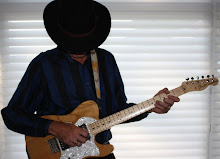
I don’t what geniuses decided to move Rock ‘n’ Roll over into Country
and hide it there so’s they could keep it alive, but bless ‘em.
Showing posts with label musical genres. Show all posts
Showing posts with label musical genres. Show all posts
Friday, 23 October 2015

Friday, 21 August 2015
The Song Doesn’t Remain The Same
Interesting article from Gibson on 10 Led Zeppelin Songs That Deserve More
Attention. Given
corporate radio has reduced their canon to a handful of songs, the list should
be much longer, but no matter.
Even the most ardent Zeppelin fan would admit that some tunes are less
approachable than others, but the list serves as a great reminder that this
band had simply incredible range. They
covered pretty much every genre of music that was even remotely popular during
their day, and pushed us into a few new directions while they were at it. They covered more real estate than anyone
else.
Most bands find a sound and then hammer it into the ground. The best bands challenge themselves, explore,
experiment, investigate and instigate.
Sure, these guys always sounded like Led Zeppelin, but they had the
range of about 10 different bands.
Tuesday, 30 December 2014
Genrification
Speaking of genres (well, I was two posts ago), wasn’t it all so much
easier when we though of everything as just pop – or rock ‘n’ roll (take your
pick)?
But this genre thing is outta control.
I mean, I get that Easy Listening and Pop and Rock and Folk and R&B
and Hip Hop just don’t cross paths too much any more(except maybe on awards
shows). I’m inured to the fact that rock
has gone through all this cell division so we’ve got Folk Rock, Punk, Metal,
Alternative, Prog, Indie and so on and so on and even more so on.
I’ve slowly come top recognize that we need additional labels such as
House and Psychobilly, and Emo and Hardcore.
I guess they serve a purpose.
But brother, when I browse some online music sites, I’m overwhelmed by
all these weird genres: Doom? Sleaze?
Sadcore? Red Dirt?
Really? What are these about?
OK, you can kinda guess what Melodic Death might be like, or Screamo, or
Horrorcore, or Trip Hop. Gothabilly you
can almost picture (or hear, I guess).
Ditto Acid Folk, even Swamp. I
think.
And it turns out most ‘em have entries in Wikipedia, so I suppose
there’s more than one band doing them.
But simple folk like me have to be enlightened as to why we need
Shoegaze, Glitch or Grime.
But some of this sub-genrification is kinda pointless isn’t it? I mean, Wikipedia defines Street Punk as “a
working class-based genre of punk rock.”
Hello? Was normal Punk something
reserved for the upper class? Like The
Sex Pistols gave us music for Toffs?
Maybe some of these bands are just trying to distinguish themselves in
ways that don’t involve their actual music.
Maybe they’re having us on.
Noir? Heartfelt and Lyrical? Youtube?
Jack Daniels?
I think I need a swig.
Friday, 12 December 2014
I Can Sense It From A Mile
Go have a listen to Pete Townshend’s Secondhand Love.
Nice, eh? What would you call
that? Rock? Blues?
R&B?
All the above and then some, right?
Sometimes great songs exemplify a genre.
Sometimes they defy categorization.
Who cares? Great music is great
music.
Tuesday, 17 June 2014
Zombie Apocalypse Music
Of
all the musical genres out there, the one that scares me the most is the one
they call singer-songwriter. Some
earnest cat with a guitar telling you about his sad luck, or complaining about
what’s wrong with the world. Downer
stuff, man. Run away and hide. We’re all doomed.
Wait
a minute! Wikipedia says
singer-songwriter just means musicians who write, compose and perform their own
music – in the finest folk tradition. Leadbellly,
Woody, Dylan – guys like that. That’s
cool, right?
And
anyway, Buzz, don’t you adore James Taylor and Cat Stevens, and didn’t you
enjoy and respect some of those hippy-era guys like Tim Hardin and Bruce
Cockburn?
And
by the way, Buzz, what the heck do you think most of your music should be called?
OK! Fine!
Then why do I associate the genre with the likes of Harry Chapin and Jim
Croce and Dan Hill, guys whose songs – with all due respect – make me lose my
will to live?
Maybe
it was that bad voodoo going on in the early seventies, the force that
codified, stereotyped and exaggerated everything, the thing that pushed metal
into silliness and prog rock into pointlessness and soul into disco and goofy
hair. Maybe it’s just that little bit of
singer-songwriter that turns me off.
Anyway,
it ought to be the most respected genre, ‘cause it’s got to be the oldest. Troubadours, bards, poets, Homer and all
that.
By
the way, I’d respectfully suggest the Wikipedia entry
needs a major overhaul. Maybe Frank
Zappa did write, compose and play his
own songs, but come on! Is singer-songwriter really the genre that
pops to mind when you hear his name?
Then
again, as David Knopfler’s thoughtful article points
out, it’s a genre that has defied categorization.
Friday, 10 January 2014
Mind-Blowing Music
Gibson has a list of 10 Classic Albums to Expand Your
Musical Horizons, and a message: get outside your comfort zone.
The list includes work by
the likes of Hendrix, Pink Floyd, The Black Keys and Tom Waits, with whom I
easily relate.
But it also includes artists
I have shied away from, such as Coltrane, Hank Williams and Brian Eno.
And, sadly, it contains a
few artists I had never heard of but probably should have, like Sonny Sharrock,
Junior Kimbrough and Richard Hell and the Voidoids.
Reading the write-ups, I can
see that each of these artists would have something to offer that relates to
genres and styles I like, but pushes me past where I normally go if left to my
own devices. In terms of lighting that
creative spark, it’s a great idea to immerse yourself in something new.
And if I think about it,
most of my heroes did/do just that.
Thanks, Gibson. You’ve given me some homework to do.
Monday, 9 April 2012
Dividing Up The Pie
I was playing around with my music map, figuring out where to locate my favourite artists. Came up with this:

Things get a little crowded in the centre, which makes sense. Given my assertion that psychedelic has a dose of Classical, I'd like Cream to be more to the left. And, given Gilmour's guitar playing, I'd like Pink Floyd to be more to the right, touching the Blues.
The Rock circle is definitely the busiest. Those that touch the circle but are partially outside make sense to me (e.g. Eagles being part Rock, part Country - as compared to Buddy Holly who is Rock but you can hear the Country influence.
It was easy to put Petty and Young at the confluence of Folk Rock and Country Rock. On the other hand, I confess that the placement of Springsteen was purely arbitrary.
The model breaks down for some artists. Dylan has a heavy Blues influence, and Zeppelin was pretty good at Folk, but I don't have Blues and Folk overlapping. CCR and The Beatles both need to touch the R&B circle but I couldn't do that without giving up something else.
Of course the best bands defy categorization, and cover more territory than I was able to allocate.
One nice bit of foresight (if foresight can be accidental) was the little blank space just north of Rock centre where you could say the influences where everything and nothing. Good place to put the most versatile - and unique - bands, isn't it? And those would be The Beatles and The Stones.
Wednesday, 4 April 2012
Pop Boom Fizzle
One of the sub-genres you might have noticed missing from my music map is Power Pop.


And sure, it's just Pop, but it's heavier, right? More to the right to reflect that Metal, Blues Rock influence.
Well, it's omitted because I was never a fan. Foreigner, Journey, REO Speedwagon, Styx ... all those power ballads to me were just a compromise. I disagree here with Wikipedia, which describes Power Pop as Pop music with a Rock edge, and lists The Beatles, The Who and The Kinks as early examples. Fair enough, but I'm talking about the bands that specialized in rather soppy ballads that just happen to have a furry guitar in the song.
As for the compromise, guys wanted to listen to Pink Floyd and Led Zeppelin, but their girls wanted Lionel Ritchie and The Bee Gees. Foreigner was the middle ground. Good musicians and all, but so what if they had electric guitars? The songs were really Easy Listening, most of 'em ones on the outside of my Rock circle.
Overlaps and blends that create something new: exciting.
Ones that are a shotgun wedding to keep the peace: not so much.
Subscribe to:
Posts (Atom)